OptiLinker
OptiLinker
OptiLinker
High-performance QSFP28 modules engineered for high-density, low-latency, and superior thermal efficiency across enterprise and telecommunication infrastructure in the United States.
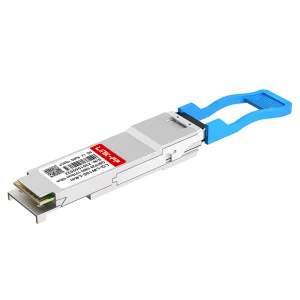
Understanding the critical infrastructure shifts driving the demand for high-speed pluggable transceivers in the United States.
The telecommunications and data storage industries in the United States are currently undergoing an unprecedented structural transition. The rapid proliferation of Artificial Intelligence (AI) modeling, Machine Learning (ML) pipelines, Large Language Model (LLM) training, and High-Performance Computing (HPC) has fundamentally shifted data traffic from traditional north-south patterns to intensive east-west patterns within the data center. Consequently, conventional 10G and 25G connection architectures have evolved into bottlenecks, rendering 100G, 200G, and 400G optical transceivers the baseline requirement for modern network fabrics.
"According to recent US data center market assessments, regions such as Northern Virginia (Ashburn), Northern California (Silicon Valley), Dallas-Fort Worth, and Chicago are experiencing massive hardware upgrades. Hyperscale operators and enterprise networks alike are actively retrofitting legacy frameworks to accommodate PAM4-modulated 400G transceivers and preparing their infrastructure for the upcoming 800G and 1.6T physical layers."
Several key macro and microeconomic drivers are accelerating the procurement of high-speed optical transceivers across US metropolitan areas:
Ensuring absolute compatibility, regulatory compliance, and seamless operational integration within the US regulatory framework.
Each module undergoes precise programming to guarantee absolute compatibility with leading US switch architectures including Cisco, Arista, Juniper, Dell, HPE, and Mellanox. We offer customized EEPROM firmware programming to match specific OEM requirements.
Our optical modules strictly adhere to international certifications required for US deployment. This includes FCC Part 15 Class B compliance, UL/CSA safety certifications, CE marking, Laser Class 1 safety regulations (FDA 21 CFR 1040.10), RoHS, and REACH environmental standards.
We work with distribution hubs and logistics partners across the US to offer localized buffer stocking options. This minimizes delivery lead times and ensures a rapid Return Merchandise Authorization (RMA) process for our long-term OEM/ODM clients.
Leveraging state-of-the-art packaging technology, rigorous quality testing, and unmatched manufacturing agility.
The manufacturing and packaging of high-speed optical transceivers require not only deep engineering expertise but also access to a highly integrated material supply chain. China’s optical communication hub provides unparalleled advantages in this regard, offering optimized access to high-performance laser diodes (VCSEL, DFB, EML), silicon photonics platforms, precision optical sub-assemblies (TOSA/ROSA), and advanced packaging capabilities (COB, flip-chip, and box-type packaging).
OptiLinker Optoelectronics Co., Ltd. (OptiLinker) operates at the forefront of this supply chain network, combining cost-efficiency with high-precision engineering to manufacture world-class optical transceivers under the brand OptiLinker (www.optilinkertrans.com).
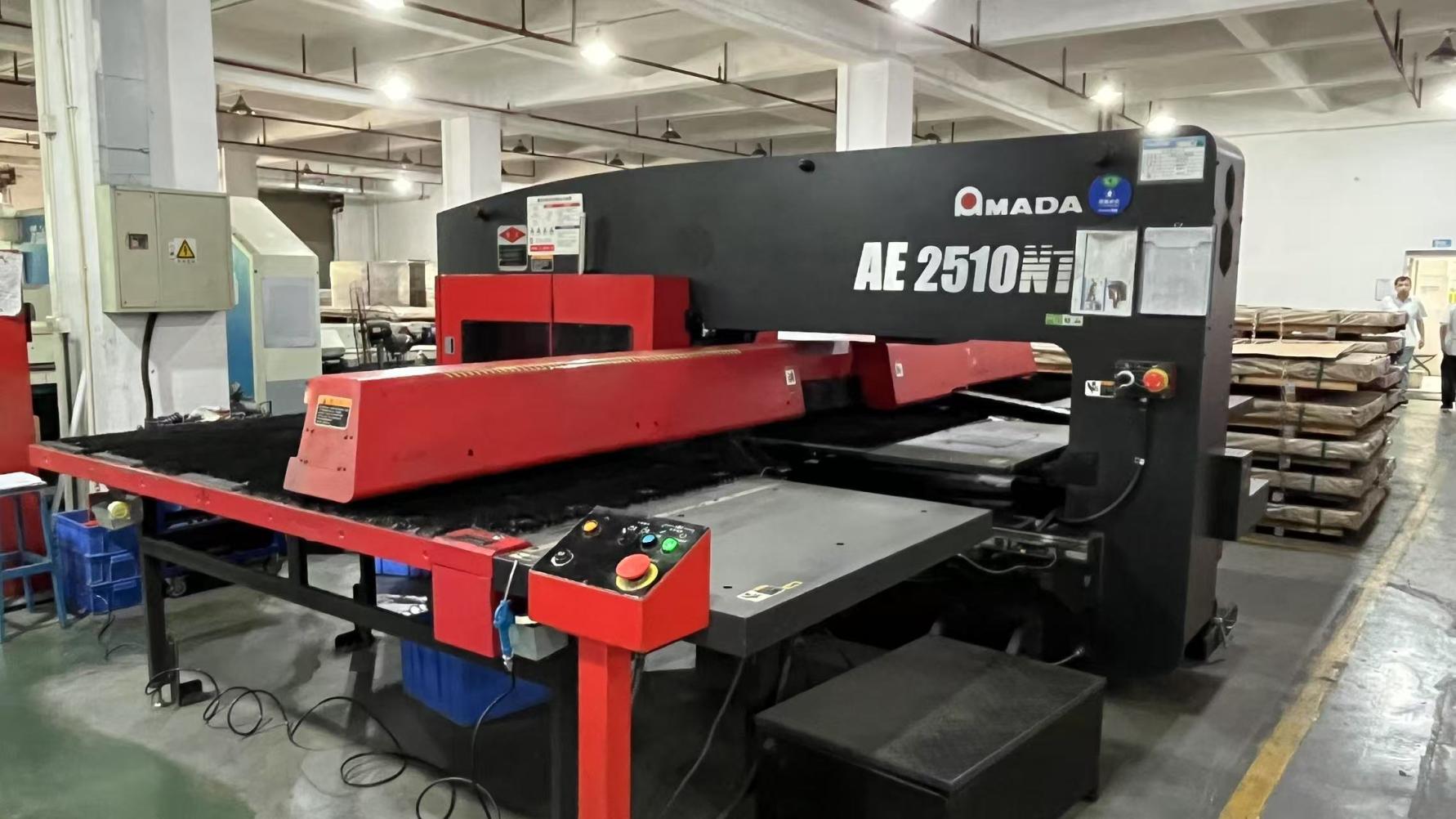
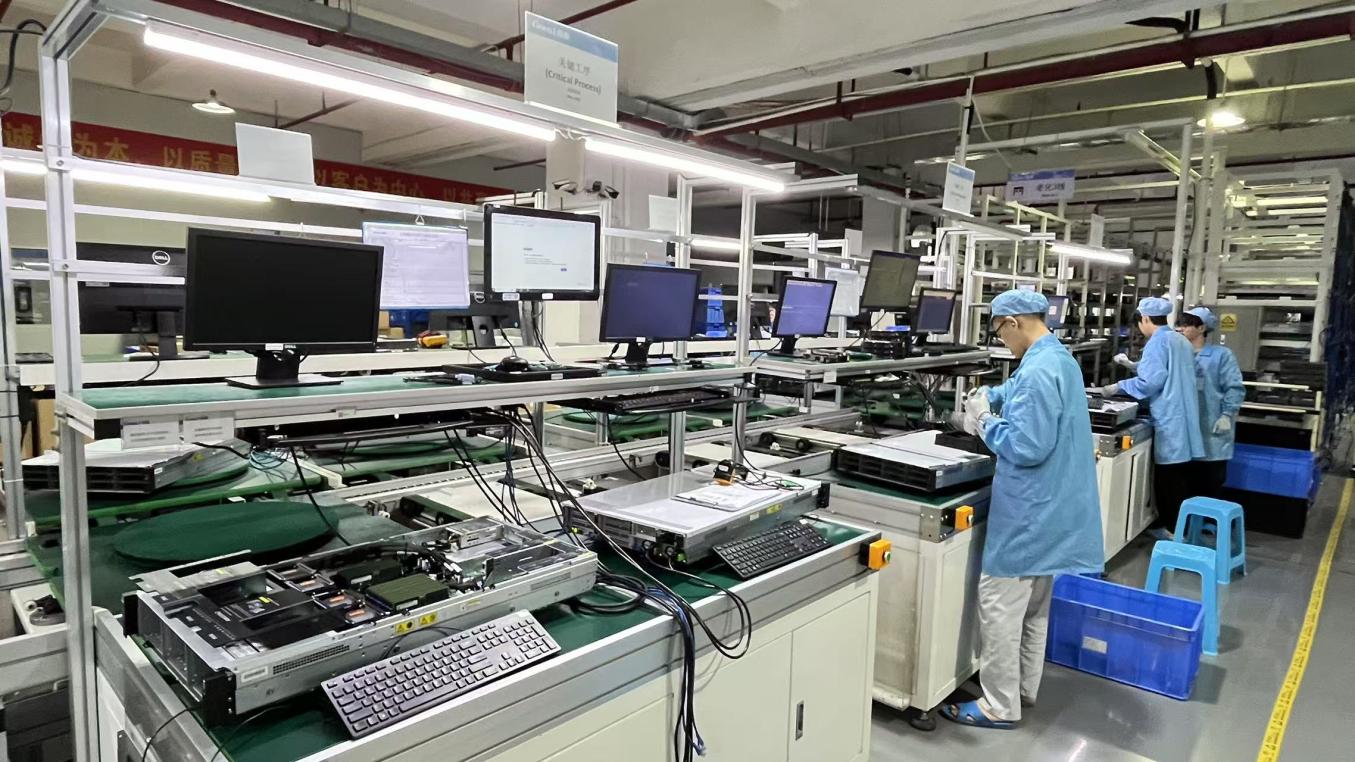
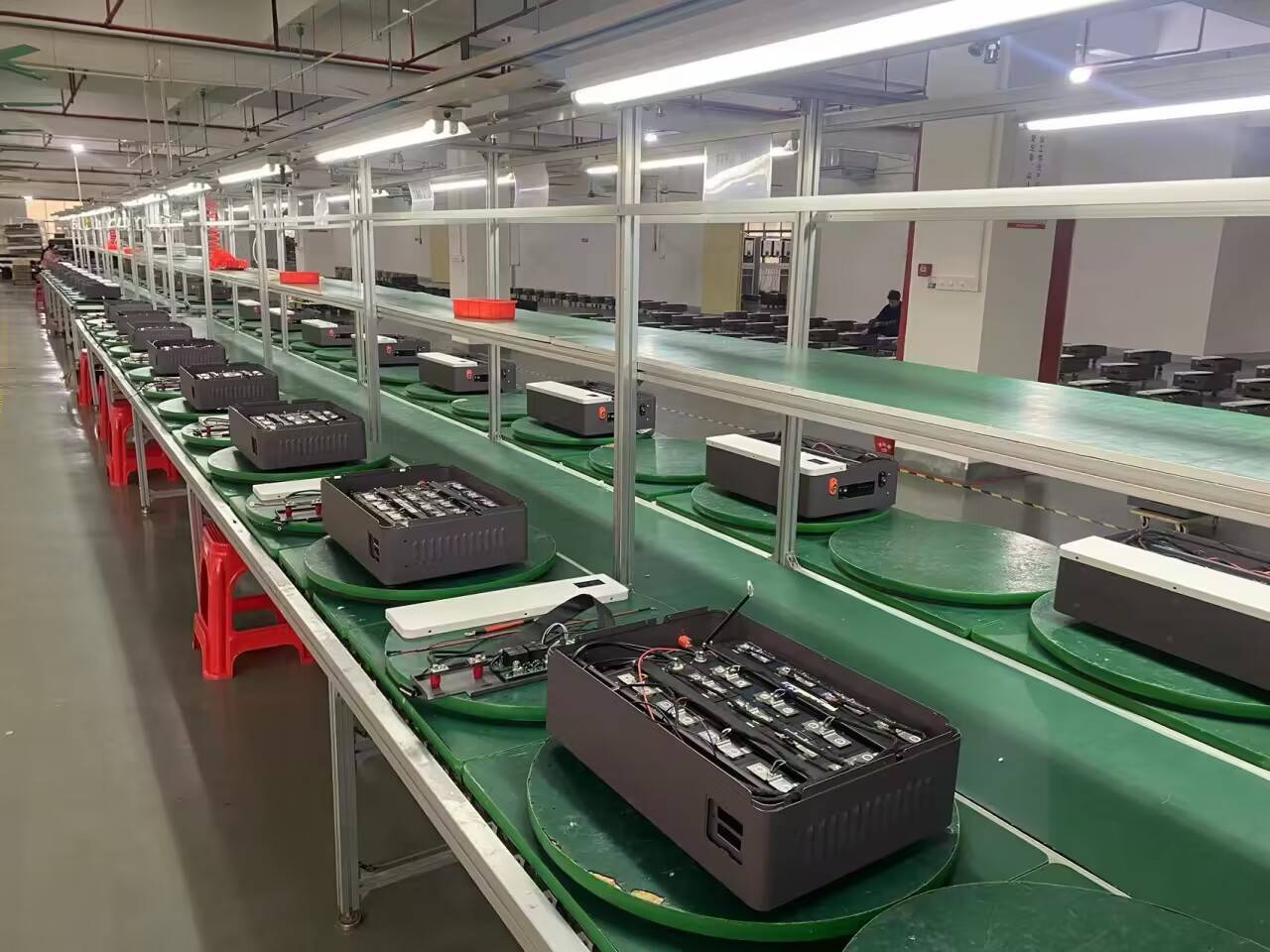
At OptiLinker, we understand that transceiver failures can result in massive network downtime for our US customers. Therefore, we implement a strict 100% testing regimen on every single transceiver module that exits our facility:
How physical layer innovations are redefining efficiency and capability metrics for hyperscale operators.
As transmission speeds continue to scale, standard optical modules encounter severe thermal and power density challenges. The optical transceiver industry is actively pivoting to address these limitations through revolutionary architectural advancements:
By integrating complex optical subsystems directly onto silicon substrates, Silicon Photonics consolidates multiple discrete optical components onto a single Photonic Integrated Circuit (PIC). This reduces optical insertion loss, improves reliability, and minimizes production complexity, making it highly competitive for 400G and 800G coherent transceivers.
LPO architectures eliminate the Digital Signal Processor (DSP) inside the optical module, relying instead on the host switch ASIC's signal compensation capabilities. This significantly reduces latency and lowers transceiver power consumption by up to 50%, providing an ideal path for AI training networks where power density is a key bottleneck.
CPO represents the ultimate architectural shift, moving the optical transceivers off the faceplate and mounting them directly onto the same substrate as the network switch ASIC. While pluggable transceivers (QSFP-DD, OSFP) continue to dominate current deployments, CPO represents the long-term solution for 1.6T and 3.2T switching platforms.
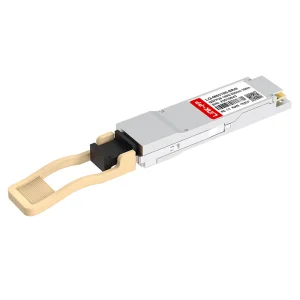
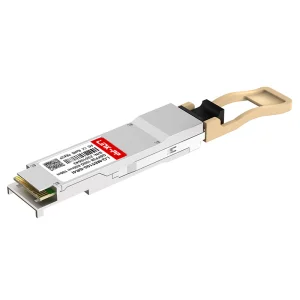
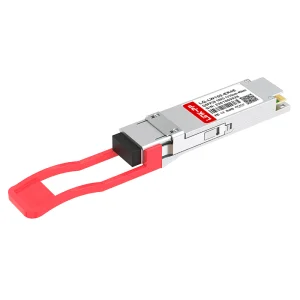
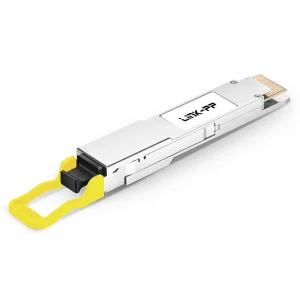
Examine our complete selection of 100G, 200G, and 400G optical transceivers designed for high-density networking environments.
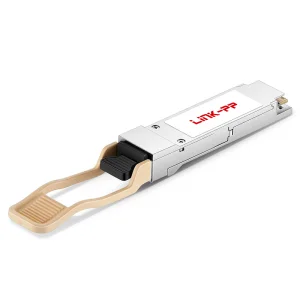
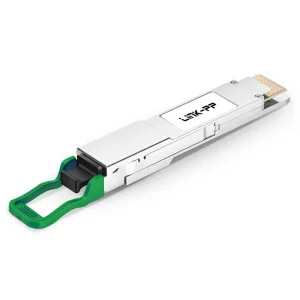
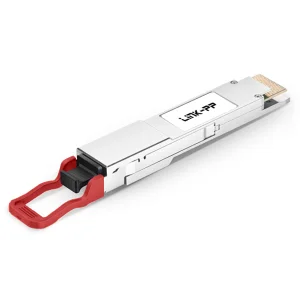
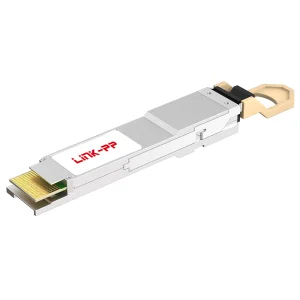
Addressing key specifications, deployment standards, and integration queries for enterprise network architects.
The primary difference lies in the modulation technology and data capacity. QSFP28 (Quad Small Form-factor Pluggable 28) modules operate using Non-Return-to-Zero (NRZ) modulation, carrying 4 channels of 25Gbps each to achieve 100G. QSFP56 utilizes Pulse Amplitude Modulation 4-level (PAM4) modulation, doubling the capacity per lane to 50Gbps, thus facilitating a total throughput of 200G over the same mechanical footprint.
OptiLinker maintains a dedicated EEPROM programming database. Our engineering team modifies the module's controller firmware to mimic the matching vendor configuration, satisfying switch checksums and protocol requirements. Every batch of modules is verified physically on OEM hardware in our test laboratory before packaging.
400G DR4 modules run over Single Mode Fiber (SMF) using parallel MPO-12 connectors, limited to a link distance of 500 meters. 400G FR4 modules operate over Single Mode Fiber using duplex LC connectors with Coarse Wavelength Division Multiplexing (CWDM) technology, which extends the maximum transmission reach to 2 kilometers, making FR4 ideal for campus backbone cabling.
Yes. All transceivers exported to the United States conform fully to RoHS (Restriction of Hazardous Substances) and REACH guidelines. Furthermore, they are manufactured in accordance with strict FCC standards and bear the necessary certifications to verify physical safety and EMI shielding integrity.
Connect with our expert team of optical engineers to review compatible firmware configurations, bulk volumes, and customized delivery logistics for the US market.
Send Inquiry Now