OptiLinker
OptiLinker
OptiLinker
Explore our production-ready, highly compatible transceivers covering standard wavelengths, BiDirectional options, and extreme-distance modules up to 160km.
With over a decade of dedication to precision optics, OptiLinker produces high-integrity solutions for high-performance communication systems.
Founded in 2016, OptiLinker Optoelectronics Co., Ltd. (brand: OptiLinker) operates as a leading high-speed optical module OEM/ODM partner for global data center operators, metropolitan network developers, and telecommunication hardware distributors. From our modern development facilities spanning approximately 320㎡, we leverage over 12 years of core industry expertise and 8 years of international B2B export success.
OptiLinker maintains active deployment operations across the Americas, Europe, the Middle East, and Southeast Asia, generating an annual export revenue exceeding USD 12 million. By focusing on comprehensive component qualification, multi-platform compatibility validation, and automated production testing, our transceivers ensure reliable long-term operations in industrial, commercial, and enterprise applications.


Analyzing why the 1.25G SFP module standard remains a crucial bedrock of global optical networking.
While 100G and 800G modules dominate cloud-scale data centers, legacy enterprise, municipal, and industrial automation networks maintain massive 1G footprints. Upgrading entire physical infrastructures is cost-prohibitive. The 1.25G SFP allows organizations to extend the operational lifetime of existing switches, routers, and industrial gateways cost-effectively.
Modern smart utility grids, security camera loops (CCTV), and Industrial Internet of Things (IIoT) applications do not require multi-gigabit throughput. Standardizing on 1.25G SFP devices provides more than adequate bandwidth while keeping hardware thermal signatures, system power requirements, and unit costs to a absolute minimum.
Global demand continues to show steady growth across developing economies (specifically in Latin America, Southeast Asia, and Eastern Europe) as telecom carriers transition Rural Broadband/FTTH lines. Our supply chain of over 850 partners ensures we can scale component sourcing to navigate global trade shifts smoothly.
OptiLinker's 1.25G SFP modules conform strictly to the Multi-Source Agreement (MSA), which regulates dimensions, optical interfaces, electrical connectors, and diagnostic signaling. Our hardware is built on high-performance optical emitters—including VCSEL (850nm), DFB lasers (1310/1550nm), and highly sensitive PIN/APD photodetectors—ensuring minimum attenuation margins and maximum link reliability.
We supply both Commercial Temperature Grade (0°C to 70°C) for standard telecom racks and Industrial Temperature Grade (-40°C to +85°C) for challenging applications like outdoor utility closets, intelligent traffic systems, and sub-zero environments.
| Standard | Fiber Type | Wavelength | Typical Reach | Connector |
|---|---|---|---|---|
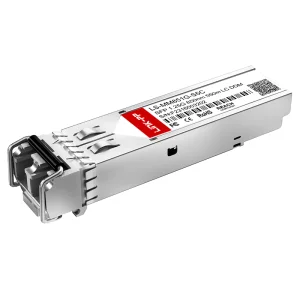
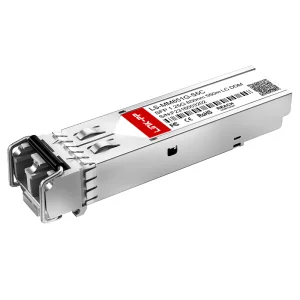
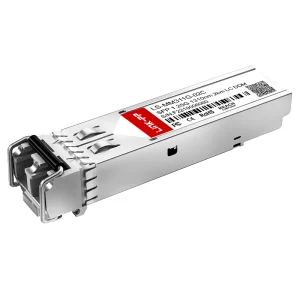
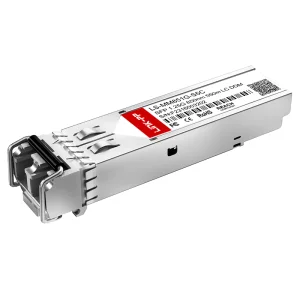
| 1000BASE-SX | Multimode (MMF) | 850nm | Up to 550m | Duplex LC |
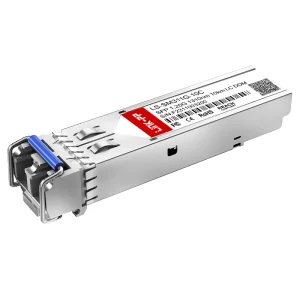
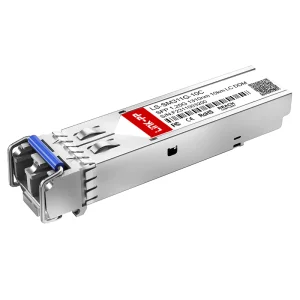
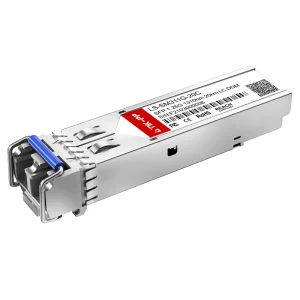
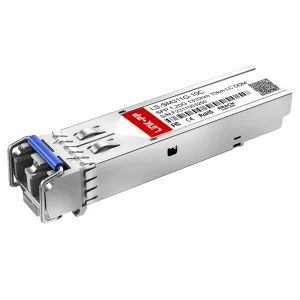
| 1000BASE-LX/LH | Single Mode (SMF) | 1310nm | 10km - 20km | Duplex LC |
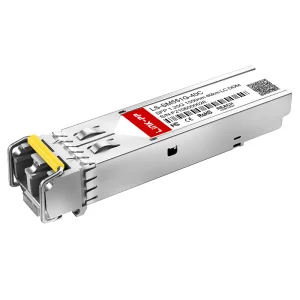
| 1000BASE-EX | Single Mode (SMF) | 1550nm / 1310nm | Up to 40km | Duplex LC |
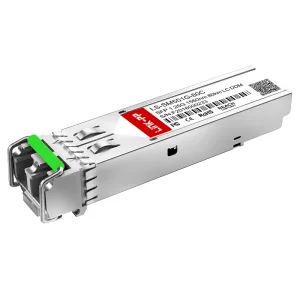
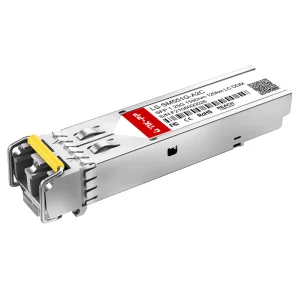
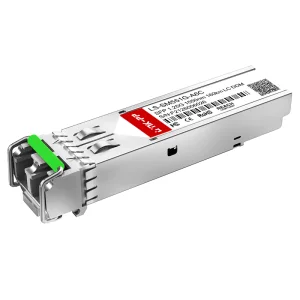
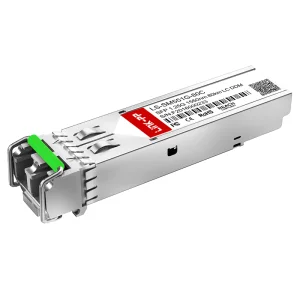
| 1000BASE-ZX | Single Mode (SMF) | 1550nm | 80km | Duplex LC |
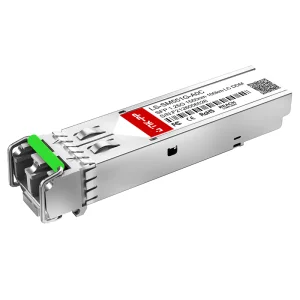
| 1000BASE-EZX | Single Mode (SMF) | 1550nm | 100km - 120km | Duplex LC |
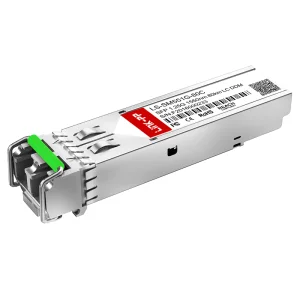
| 1000BASE-ZXC | Single Mode (SMF) | 1550nm | Up to 160km | Duplex LC |
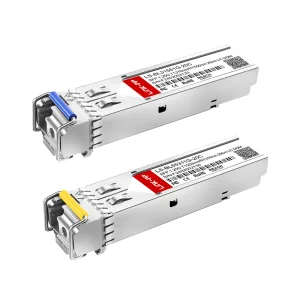
| 1G BIDI (WDM) | Single Mode (SMF) | Tx1310/Rx1550 (or vice versa) | 20km - 80km | Simplex LC |
Every single optical module undergoes rigorous hardware qualification to ensure zero field failures.
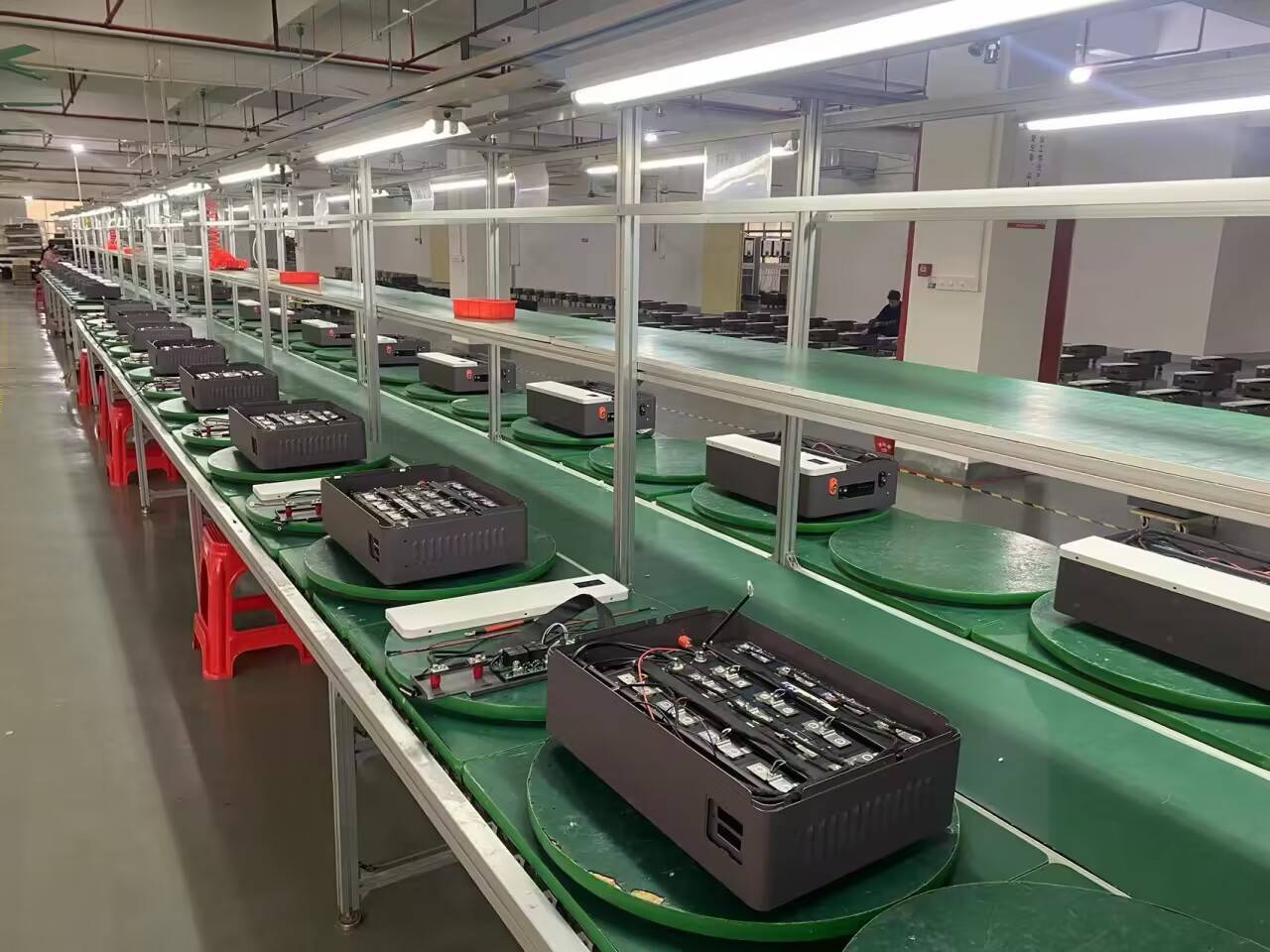
During hardware assembly, our 35 dedicated QC professionals utilize automated optical inspection to detect surface abnormalities, solder placement deviations, or structural flaws. This guarantees that all sub-components are perfectly positioned prior to final encapsulation.
To ensure high signal integrity, we evaluate transmitter characteristics using digital communication analyzers. Our technicians capture precise optical eye diagrams to verify jitter parameters, rise/fall times, and extinction ratios. High-precision Bit Error Rate (BER) testers guarantee error-free performance.
We program each module with vendor-specific microcode (Cisco, Juniper, Arista, HP, Dell, Huawei, etc.) to ensure complete host-device integration. We also calibrate Digital Diagnostic Monitoring (DOM/DDM) circuitry so users can monitor operational voltage, temperature, laser bias current, and Rx/Tx power levels in real time.
How OptiLinker is guiding its clients through the evolution of optical networking standards.
Developing lower-power optical DSP architectures to reduce power consumption per module below 0.8W. This is crucial for high-density switches where heat dissipation is a limiting factor.
Migrating longer-distance platforms (like our 120km and 160km modules) to silicon photonics chips, minimizing physical size and reducing assembly costs.
Using lead-free, RoHS-compliant manufacturing processes and incorporating recyclable alloy casings to support our clients' environmental and sustainability goals.
Designing advanced dual-rate and multi-rate SFP hardware (supporting 100M/1G or 1G/10G) to help clients transition legacy links to newer frameworks without requiring complete physical hardware swaps.
OptiLinker transceivers are deployed globally across diverse and critical network topographies.
Carrier deployments rely heavily on single-mode BiDirectional (BIDI) modules to double upstream and downstream fiber capacity over standard links. OptiLinker's robust BIDI solutions simplify layout logistics, reduce splicing costs, and streamline fiber deployment across suburban and rural residential areas.
Factory environments expose network hardware to electrical interference, extreme temperatures, and vibrations. Our industrial-grade 1.25G SFP transceivers maintain clean optical links in sub-stations and factory floors, supporting Modbus, Profinet, and EtherCAT network protocols.
To connect regional municipal offices, schools, and utility grids, our 1000BASE-ZX and EZX modules provide dependable transport over spans of 80km to 120km without needing expensive inline optical amplifiers, helping to reduce total network infrastructure costs.
Technical answers to key procurement and engineering questions regarding 1.25G SFP modules.
Select from our long-haul (40km to 120km+) and high-density single-mode transceiver modules.