OptiLinker
OptiLinker
OptiLinker
Premium solutions featuring electromagnetic shielding, integrated magnetics, and multi-protocol physical layering.
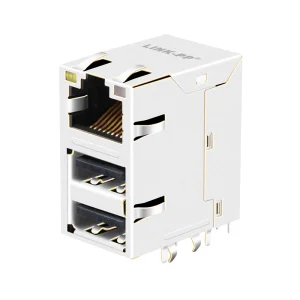
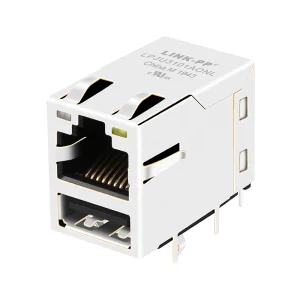
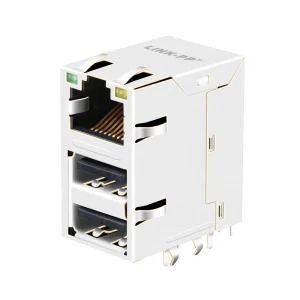
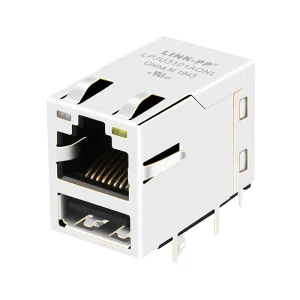
A Technical Whitepaper on Integrated Connector Modules (ICMs) for High-Frequency Systems
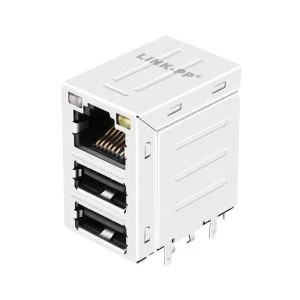
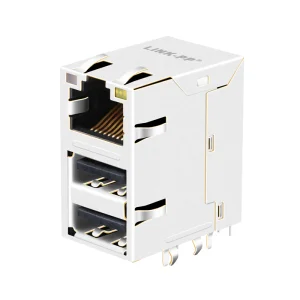
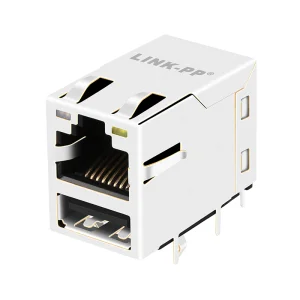
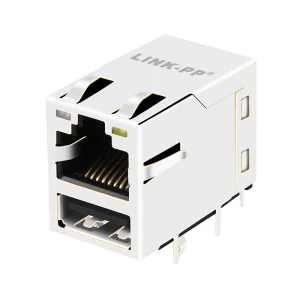
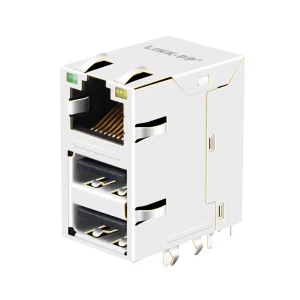
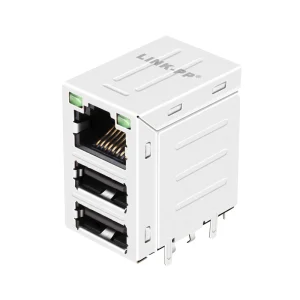
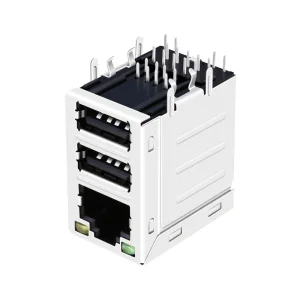
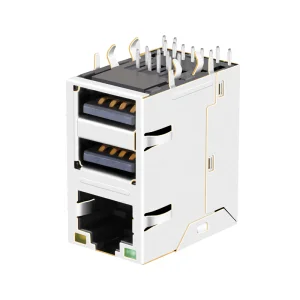
In modern electronic design, board space optimization and signal integrity are paramount. The **RJ45 Connector with USB Stacked Assembly** represents a class of high-density Integrated Connector Modules (ICMs). By merging the physical ports of a Gigabit Ethernet interface and standard Universal Serial Bus (USB 2.0 or USB 3.0/3.1) into a single, shielded metal enclosure, engineers reduce PCB real estate requirements by up to 45%.
These component systems do not merely stack mechanical frames; they integrate crucial electrical components. The Ethernet portion often embeds **isolation magnetics (filters, common-mode chokes, and 3-core transformers)** to suppress electromagnetic interference (EMI) and provide electrical isolation conforming to IEEE 802.3 standards. Meanwhile, the adjacent USB ports are routed through dedicated impedance-matched pathways (90-ohm differential impedance) to ensure high-speed transmission with minimal bit error rates (BER).
Traditional designs require discrete transformer chips on the main PCB. Stacking RJ45 and USB without internal magnetics causes significant cross-coupling of high-frequency harmonics. Our integrated magjack units place the filtering components inside the connector's metal Faraday cage, blocking high-frequency noise from USB data lines (operating up to 5 Gbps in USB 3.0) from corrupting sensitive Ethernet differential pairs.
Canada's industrial sector is undergoing a rapid transition toward digital transformation, advanced manufacturing, and green energy infrastructures. Major industrial hubs across Ontario, Quebec, Alberta, and British Columbia demand robust hardware components capable of operating reliably in harsh environments.
Engineered to strict international standards for dependable global deployments
The co-location of high-speed digital buses within a single connector shield represents an engineering challenge. When USB 3.0 (operating at a base frequency of 2.5 GHz with Gen 1 signalling) is positioned immediately adjacent to a 1000Base-T Ethernet line (utilizing PAM-5 encoding at 125 MHz), high-frequency harmonics can easily couple across the adjacent pins.
To mitigate this issue, our manufacturing process utilizes advanced **crosstalk isolation walls** and specific copper shield geometries. The internal layout separates the USB differential lines from the Ethernet magnetic core winding using high-permeability Mu-metal shielding. This shielding reduces Near-End Crosstalk (NEXT) and Far-End Crosstalk (FEXT) by more than 40 dB across the critical 1 MHz to 250 MHz spectrum.
| Parameter | Ethernet Portion (10/100/1000Base-T) | USB 3.0 Portion | Typical Test Environment |
|---|---|---|---|
| Impedance Match | 100 Ω ±15% | 90 Ω ±15% | TDR (Time Domain Reflectometry) |
| Insertion Loss | -1.0 dB max (1 - 100 MHz) | -1.5 dB max (up to 2.5 GHz) | Vector Network Analyzer (VNA) |
| Dielectric Withstanding | 1500 V AC (rms) Min | 500 V AC (rms) Min | High-Pot Tester |
| Shielding Effectiveness | > 45 dB (30 MHz to 1 GHz) | > 38 dB (30 MHz to 2 GHz) | Anechoic Chamber RF Sweep |
How do Canadian industrial operators utilize these components? Below are three primary architectural scenarios where the RJ45 with USB Stacked module acts as a critical interface bridge:
Municipalities in Canada (such as Toronto's Smart City initiatives or Vancouver's municipal monitoring projects) deploy hundreds of pole-mounted IoT gateways. These gateways gather telemetry from traffic sensors, environmental monitors, and public Wi-Fi access points. Space inside these pole enclosures is extremely limited. Utilizing a stacked RJ45 + dual USB connector allows the system designer to fit WAN connection (RJ45) and local expansion ports (USB for Bluetooth or 5G modems) on a low-profile single-board computer (SBC) form factor.
In manufacturing environments, Human-Machine Interface (HMI) panels are subjected to vibration, dust, and continuous operation. The RJ45 portion connects the HMI panel to the factory backbone network (Ethernet/IP or PROFINET), while the USB ports provide access for local technicians to upload software updates, download logs, or connect keyboard/mouse peripherals during maintenance cycles. The mechanical robustness of the connector's metal ground tabs ensures stable electrical contact even under continuous machinery vibration.
High-density rack servers and network-attached storage (NAS) arrays utilize stacked connectors along the PCIe bracket to maximize external I/O options. With Gigabit Ethernet providing remote management access (IPMI) and USB ports supporting local console connections, these integrated modules streamline physical system design and thermal airflow paths.
For enterprise procurement officers and hardware sourcing managers, choosing a component supplier is a long-term commitment. A failing connector can halt an entire production run or compromise field equipment reliability.
Key procurement benchmarks include:
Our engineering team can customize internal magnetics, LED configurations, and housing footprints to match your proprietary hardware design.
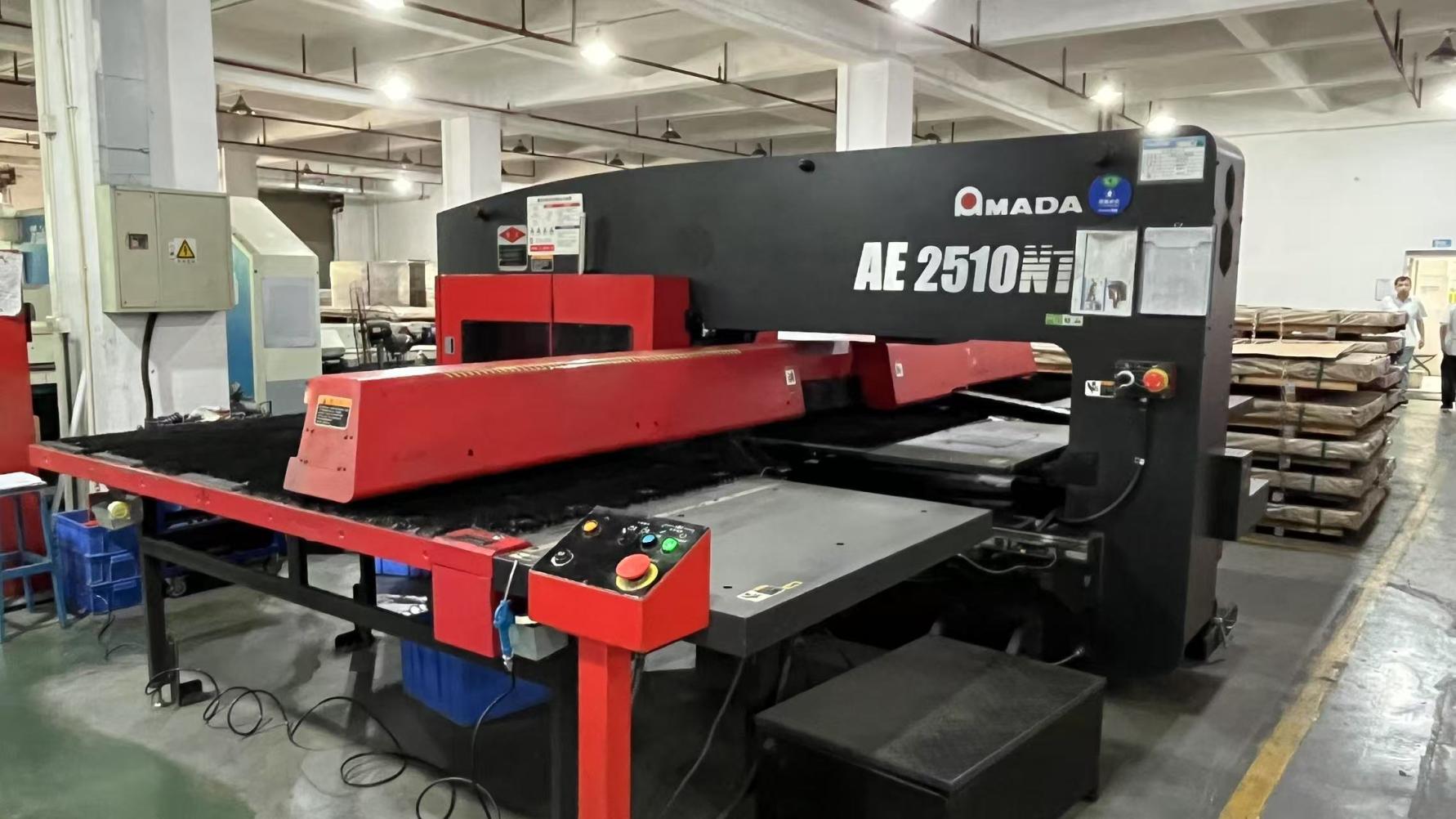
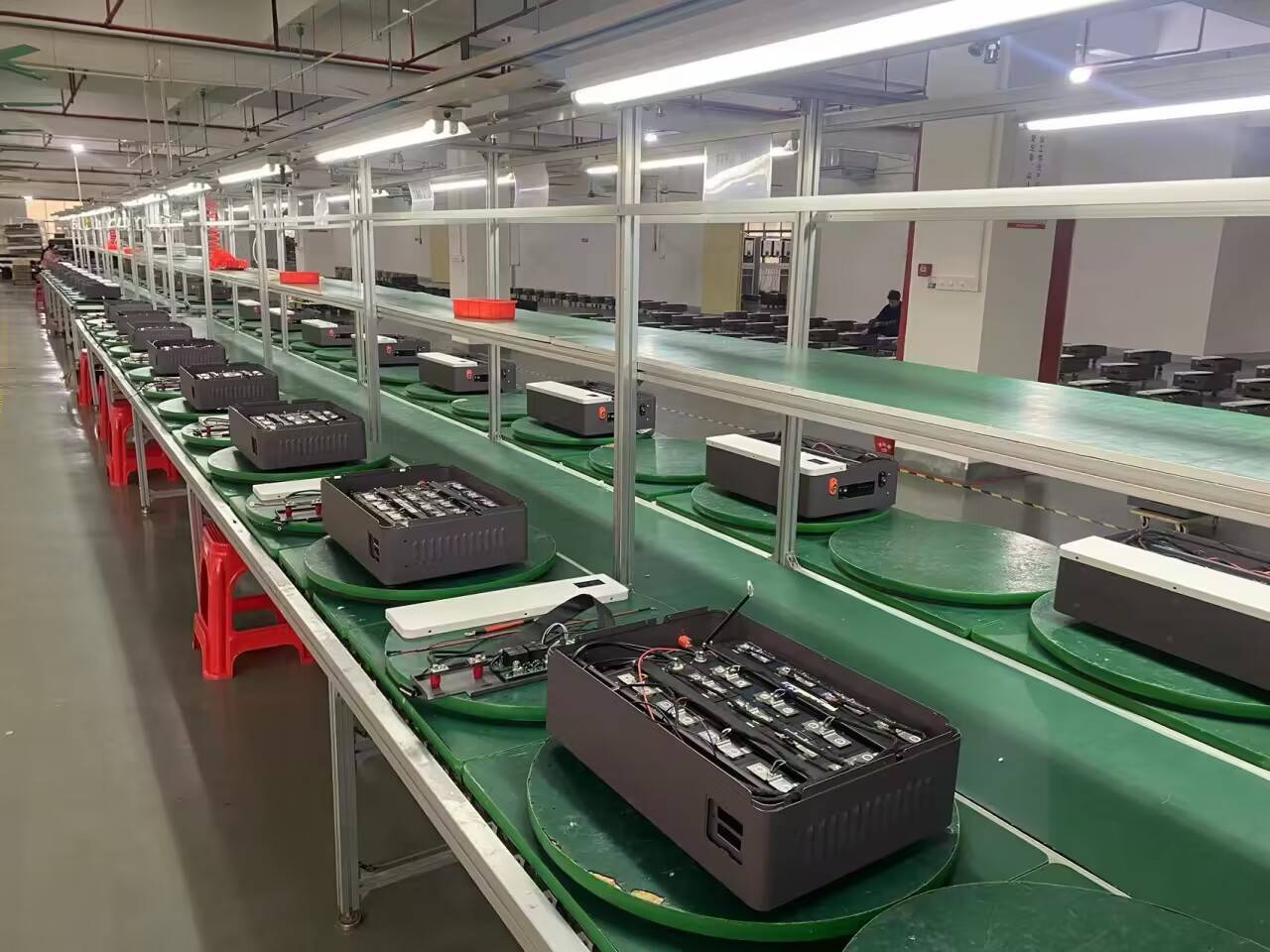
Request a Technical SampleDeveloping custom network interfaces or keeping large-scale productions cost-effective requires a strategic manufacturing partner. Leveraging China's high-tech component manufacturing ecosystem offers critical operational benefits for Canadian and global buyers:
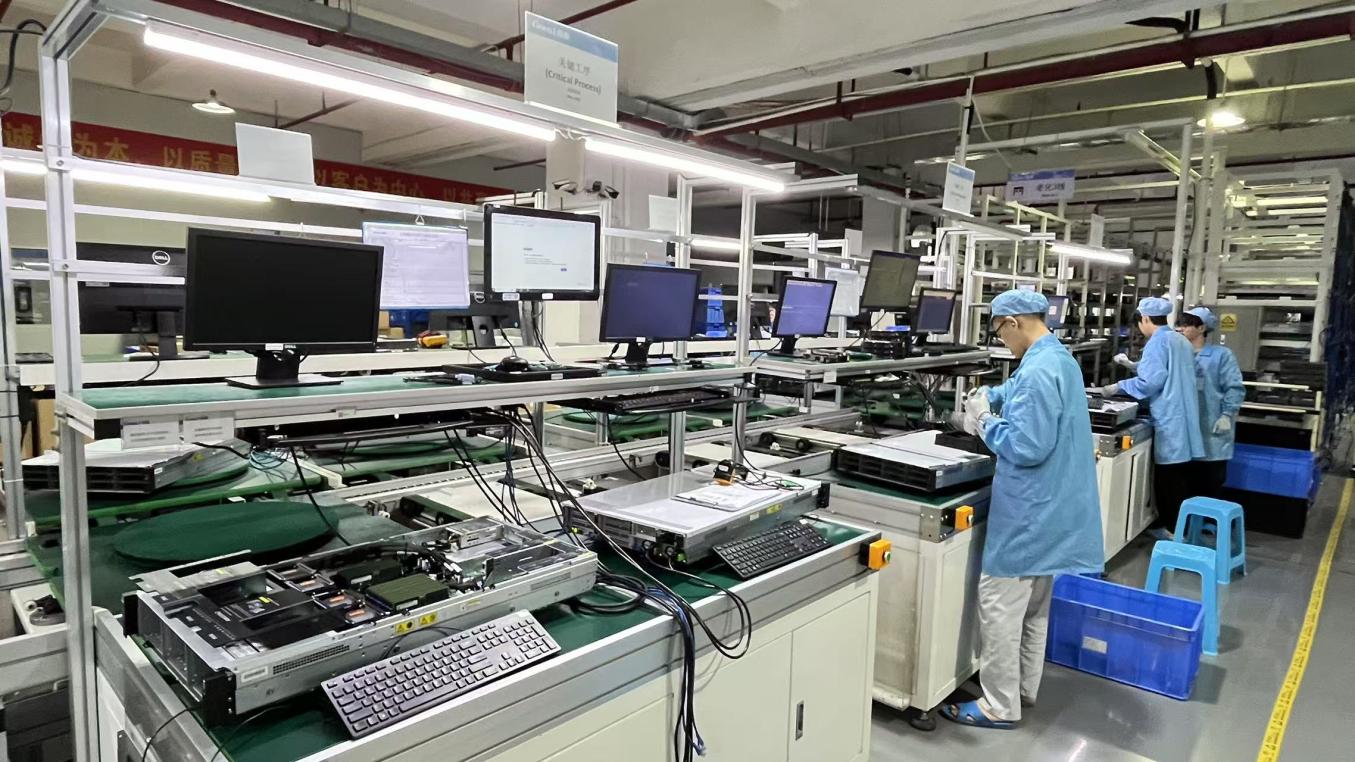
At OptiLinker, every connector batch undergoes rigorous environmental stress testing. This includes high/low temperature cycling tests (-40°C to +85°C for 96 hours), humidity chambers (90-95% RH at 40°C), and salt spray testing for corrosion resistance. Our 35 QC professionals oversee a 100% incoming material inspection to guarantee that all base metals and plastic polymers match raw specification requirements.
Complete selection of integrated RJ45 + USB modules, magnetic sockets, and stacked connectors.
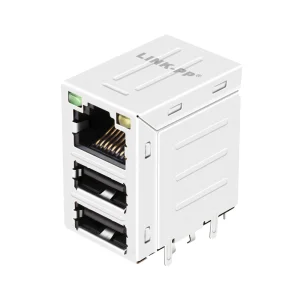
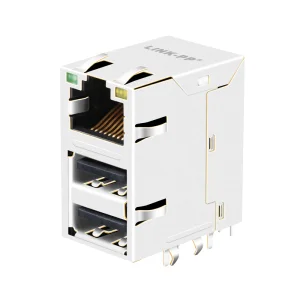
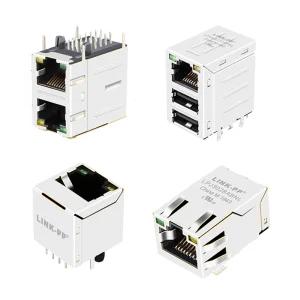
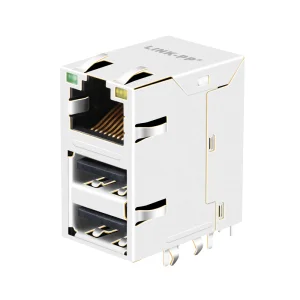
A trusted global manufacturer specializing in high-speed optical communication and high-density interface connectors.
OptiLinker Optoelectronics Co., Ltd. is a professional optical transceiver manufacturer and solution provider under the brand OptiLinker (www.optilinkertrans.com), specializing in high-speed optical communication modules for global data center and telecom applications.
Founded in 2016, OptiLinker operates a modern production facility with a total building area of approximately 320㎡. With continuous development in optical communication technology, the company has accumulated over 12 years of industry experience and approximately 8 years of export experience.
In the past year, OptiLinker achieved an annual export revenue of around USD 12 million, serving customers across North America, Europe, Southeast Asia, and the Middle East. The company maintains a strong global B2B trade background, focusing on OEM/ODM partnerships with network infrastructure providers.
Quality assurance is a core focus at OptiLinker. The company implements 100% incoming material inspection, AOI automated optical inspection, and full optical performance testing. Product verification includes BER testing, eye diagram analysis, and high/low temperature cycling tests, ensuring stable performance under demanding network environments. The quality control team consists of 35 dedicated QC professionals.
OptiLinker collaborates with a global supply chain network of approximately 850 partners, enabling efficient sourcing and stable production capacity. Its main customer base includes telecom operators, data centers, system integrators, and networking equipment manufacturers.
The company has strong R&D capabilities, supported by a team of 60 experienced optical engineers. Its engineering team specializes in high-speed optical design, signal integrity optimization, and protocol compatibility development. OptiLinker offers flexible customization options including wavelength tuning, transmission distance, packaging form factors, firmware coding, and device compatibility programming.
In the last year alone, OptiLinker launched approximately 120 new optical transceiver products, reflecting its continuous innovation and rapid response to market demand.
Driven by innovation and reliability, OptiLinker is committed to delivering high-performance optical connectivity solutions for the global digital infrastructure market.