OptiLinker
OptiLinker
OptiLinker
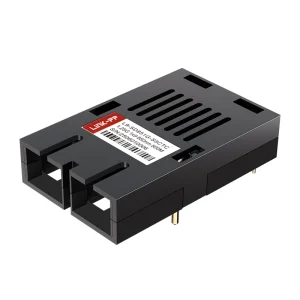
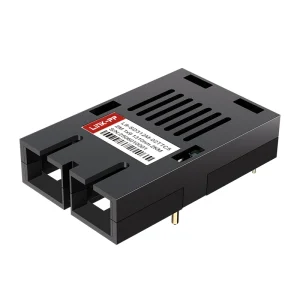
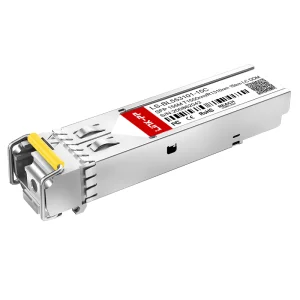
Designed for long-lifecycle legacy deployments, our high-reliability 1.25G Single Mode and Multimode transceivers are optimized to withstand electromagnetic interference and harsh operational environments.
In France, the transition toward Industry 4.0 and smart energy grid modernization (aligned with France 2030 initiatives) is driving an unprecedented demand for robust optical infrastructure. While high-speed hot-pluggable modules dominate commercial data centers in Paris and Marseille, legacy and heavy industrial networks rely heavily on the 1x9 optical transceiver form factor.
Major French state and private entities—including SNCF (railway signaling and telemetry), Alstom (transportation control infrastructure), and EDF (substation automation under the IEC 61850 standard)—require physical layer components designed for long-term survival. Unlike standard SFP modules, 1x9 transceivers are soldered directly to host PCBs, providing maximum resistance to vibration, physical shock, and extreme thermal fluctuations common in railway wayside cabinets and high-voltage transmission lines.
As the premium supplier of 1x9 modules in the European region, we provide customized optical transceivers with variable pinouts, specific logic levels (PECL/TTL), and optical link budgets tailored to sustain critical assets across France.



OptiLinker Optoelectronics Co., Ltd. (OptiLinker) is a professional optical transceiver manufacturer and solution provider under the brand OptiLinker (www.optilinkertrans.com), specializing in high-speed optical communication modules for global data centers, industrial automation, and telecom applications.
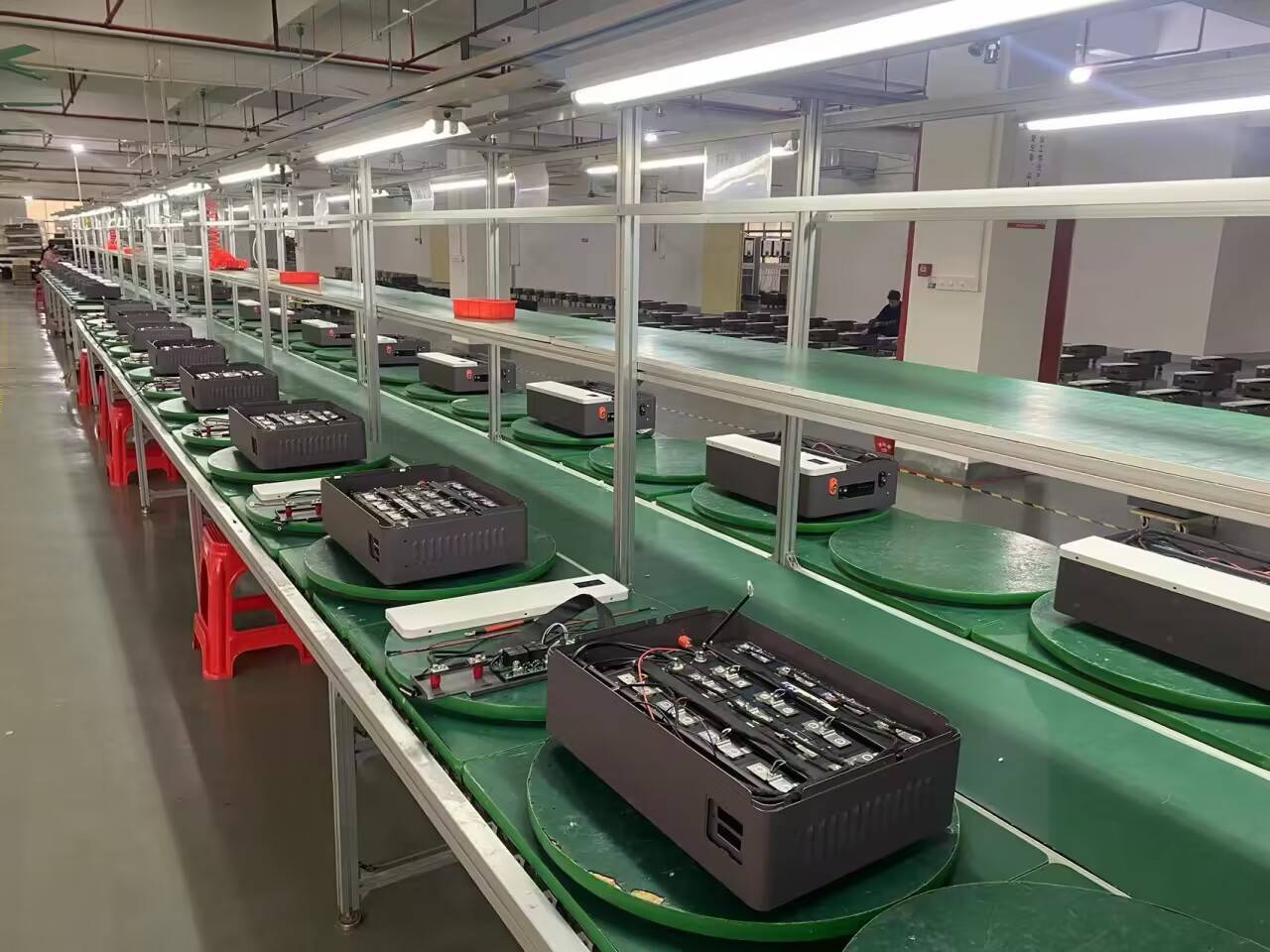
Founded in 2016, OptiLinker operates a modern production facility with a total building area of approximately 320㎡. With continuous development in optoelectronic packaging and design, the company has accumulated over 12 years of industry experience and approximately 8 years of export experience, ensuring that all our international B2B partners receive compliant, certified, and robust optical hardware.
In the past year, OptiLinker achieved an annual export revenue of around USD 12 million, serving critical infrastructure operators across North America, Europe (specifically France, Germany, and the UK), Southeast Asia, and the Middle East. The company maintains a strong global B2B trade profile, focusing on OEM/ODM partnerships with leading industrial computer makers, switch manufacturers, and network system integrators.
Our facility implements 100% incoming material inspection, Automated Optical Inspection (AOI), and full optical-to-electrical performance validation. Verification includes Bit Error Rate (BER) testing, eye diagram analysis, and cyclic high/low temperature tests (-40°C to +85°C) conducted by our 35 dedicated QC professionals.
Supported by 60 experienced optical engineers, we specialize in high-speed optical design, signal integrity optimization, and firmware customization. Options include wavelength tuning, transmission distance scaling, TTL/PECL interface alignment, and device compatibility programming for legacy environments.
By collaborating with an extensive network of approximately 850 partners, OptiLinker guarantees stable component procurement even during global shortages. We launched approximately 120 new products last year to support evolving B2B requirements.
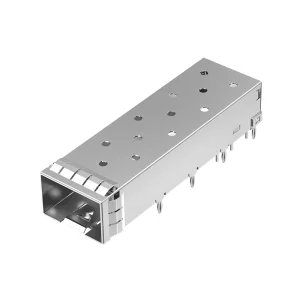
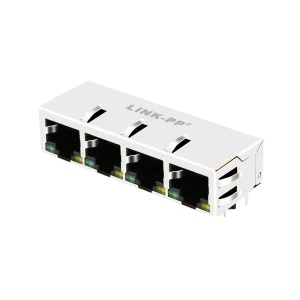
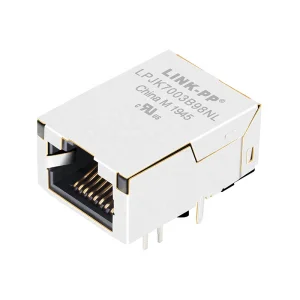
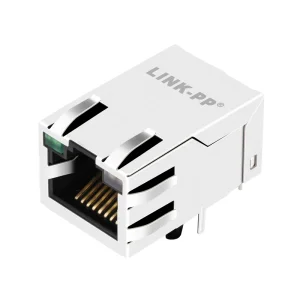
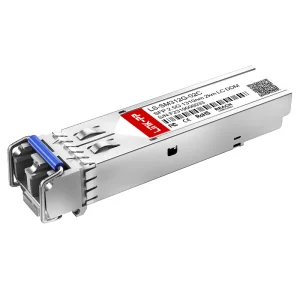
In addition to 1x9 transceivers, OptiLinker designs and exports EMI-shielded cage assemblies, high-performance RJ45 modular jacks, and standard Bidi SFP modules to enable comprehensive system integration at the physical layer.
Understanding the hardware architecture of 1x9 transceivers is key to selecting the appropriate module for industrial Ethernet and serial fiber communication systems. Below, our engineering department outlines the physical structure, pinout configurations, and typical signaling logic required for industrial network design.
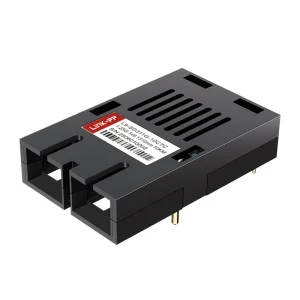
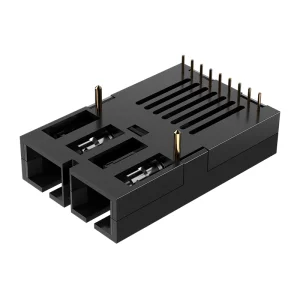
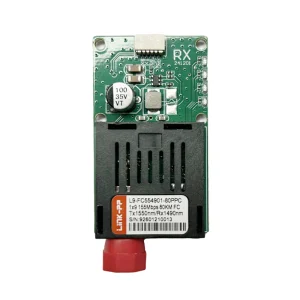
1x9 transceivers utilize a single row of 9 pins soldered directly to the circuit board. Unlike hot-swappable transceivers, this fixed interface prevents oxidation of contacts and mitigates connection dropouts caused by high vibration (common in French high-speed rail systems operated by SNCF).
| Pin Number | Signal Name | Description / Standard Function |
|---|---|---|
| Pin 1 | V EE r | Receiver Ground - Connected directly to the receiver circuit ground. |
| Pin 2 | RD+ | Receiver Data Out - Differential PECL/TTL data output (Positive). |
| Pin 3 | RD- | Receiver Data Out Bar - Differential PECL/TTL data output (Negative). |
| Pin 4 | SD | Signal Detect - Logic level indicating optical input power is sufficient. |
| Pin 5 | V CC r | Receiver Power Supply - typically +3.3V or +5.0V. |
| Pin 6 | V CC t | Transmitter Power Supply - Must be filtered for low ripple. |
| Pin 7 | TD- | Transmitter Data In Bar - Differential PECL/TTL data input (Negative). |
| Pin 8 | TD+ | Transmitter Data In - Differential PECL/TTL data input (Positive). |
| Pin 9 | V EE t | Transmitter Ground - Connected directly to the transmitter chassis ground. |
Choosing the correct logic interface is critical for compatibility with legacy microcontrollers and PHY ICs on host boards. TTL (Transistor-Transistor Logic) utilizes 0V to 5V levels and is commonly found in older sub-155 Mbps signaling circuits. PECL (Pseudo-Emitter Coupled Logic) operates on differential voltages offset from the supply rail (typically +5V or +3.3V) and is preferred for 1.25G Gigabit Ethernet links due to its superior noise immunity and speed performance.
To overcome dispersion and attenuation losses over long distances in metropolitan fiber loops, Single Mode Fiber (SMF) models utilize FP (Fabry-Perot) or DFB (Distributed Feedback) lasers at 1310nm or 1550nm. BiDi (Bidirectional) modules make use of Wavelength Division Multiplexing (WDM) to transmit and receive data over a single physical fiber string (e.g., Tx 1310nm / Rx 1550nm), cutting fiber leasing costs in half for local municipalities in departments across France.
Deploying optical network products within France requires strict compliance with French and EU directives. OptiLinker ensures that all exports to France strictly align with the necessary environmental, cybersecurity, and safety frameworks.
All 1x9 optical modules and SFP cages exported to France are certified with the CE mark. They strictly adhere to the RoHS (Restriction of Hazardous Substances) Directive 2011/65/EU and REACH registration requirements, guaranteeing minimal environmental impact.
In alignment with French Decree No. 2014-928 on waste electrical and electronic equipment (WEEE), our packaging and hardware components are prepared for eco-friendly reclamation, ensuring that local system integrators avoid disposal penalties.
OptiLinker respects France's national cybersecurity policies defined by the Agence nationale de la sécurité des systèmes d'information (ANSSI). Our transceivers contain no backdoor microcode, preventing malicious intrusion at the hardware layers of French critical networks.
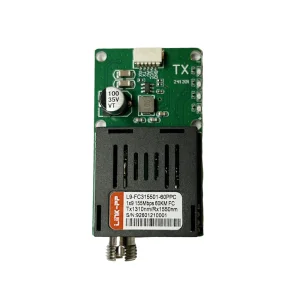
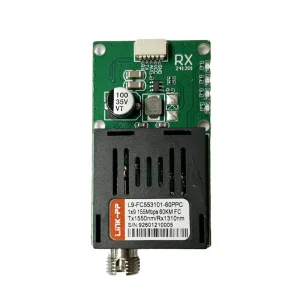
Browse our exhaustive catalog of 1x9 duplex, bidirectional, and single-mode/multimode fiber optic transceivers available for rapid export to French industrial zones.
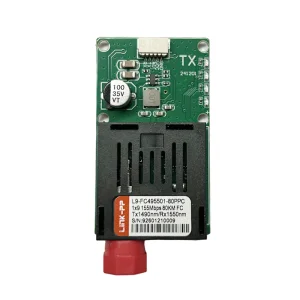
Review the essential technical queries regarding 1x9 transceivers configuration, logistics, and compatibility for operations in France.